 Real Estate Tax Calc
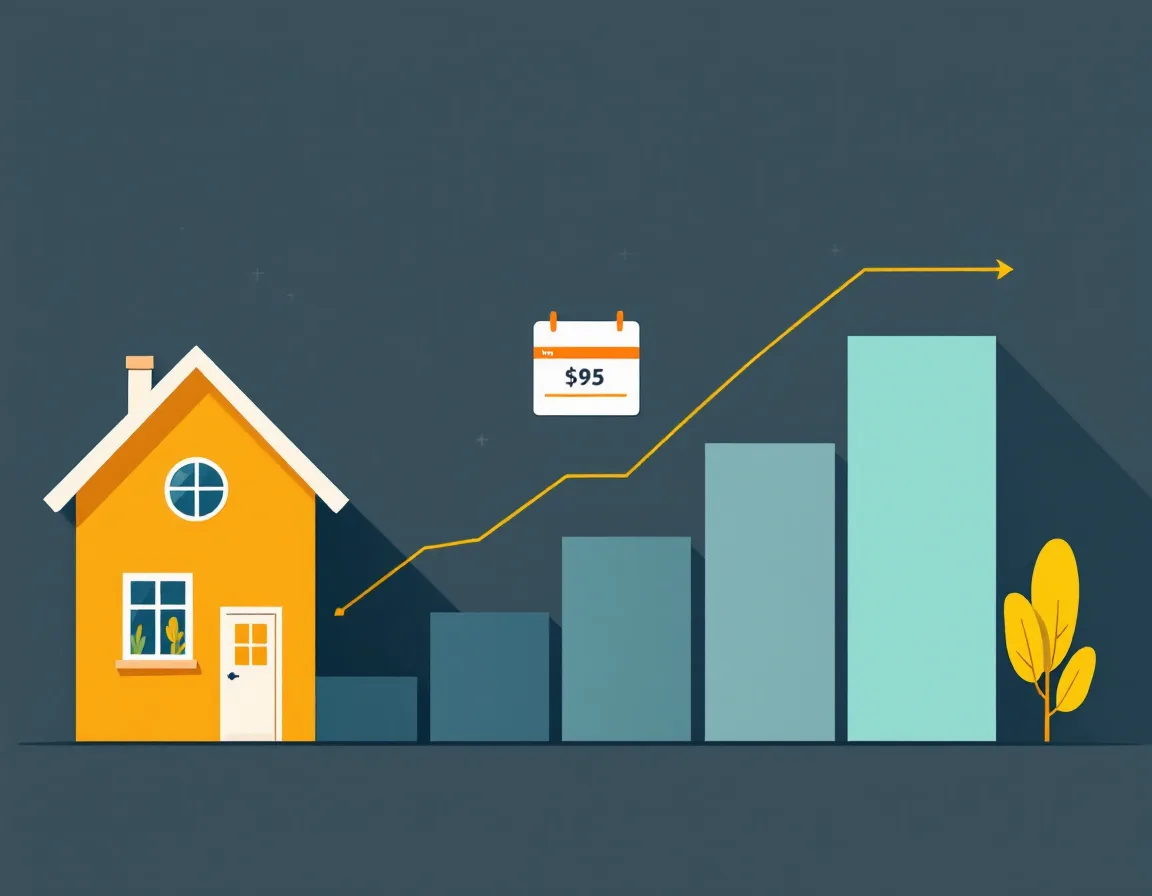
Coop ownership structure and how it differs from owning real property directly
When you buy a cooperative apartment, you do not receive a deed to real property. Instead, you receive two things: (1) shares of stock in the cooperative housing corporation, and (2) a proprietary lease granting you the exclusive right to occupy a specific unit in the building. The corporation itself holds title to the building and the underlying land.
This structure creates a tax question: can you depreciate something you do not technically "own" as real property? The IRS answered yes in Rev. Rul. 73-240, finding that the tenant-stockholder relationship creates a property interest sufficiently equivalent to ownership that depreciation is permitted, provided the taxpayer's unit is used for rental and not personal use.
The practical consequence is that a coop owner who rents out their unit gets essentially the same depreciation deduction as any other residential landlord — but they must do a bit more work to establish the right depreciable basis, because the cooperative's land and building are owned by the corporation, not by the individual shareholder.
The IRS position: you CAN depreciate a rental coop
The authority for coop depreciation rests on several pillars. Rev. Rul. 73-240 is the foundational ruling. It establishes that the proprietary lease and shares together constitute a depreciable property interest for a coop shareholder who rents to a third party. IRS Publication 527 reinforces this, including cooperative apartment rental income in its discussion of residential rental property and confirming the 27.5-year recovery period.
For a coop unit to generate depreciation deductions, it must be used as rental property — meaning you must have a tenant paying rent, or the unit must be available for rent. If you use the unit personally for more than 14 days per year (or more than 10% of the days rented at fair price), the IRC §280A vacation-home rules apply and may limit your deductible losses, just as they would for any other mixed-use property.
One important caveat: the cooperative corporation's underlying mortgage on the building does affect your deductible expenses. Your proportionate share of the cooperative corporation's mortgage interest and real property taxes flows through to your tax return as deductible items — which is an additional benefit of coop ownership beyond depreciation alone.
Establishing your depreciable basis: shares, costs, and land allocation
Your depreciable basis in a rental coop is calculated as follows:
Start with total purchase price: What you paid for the shares, including the purchase price itself, plus acquisition closing costs — legal fees, transfer taxes, title search, broker commissions attributable to the purchase, and similar costs. These all add to your basis.
Subtract the land component: The cooperative corporation owns land, and your proportionate share of that land is non-depreciable. You must estimate what portion of your purchase price is attributable to the corporation's land, and exclude that amount from depreciable basis.
Several methods exist for the land allocation:
- Cooperative's financial statements: If the coop's balance sheet shows the original cost of the land and the original cost of the building separately, you can compute a land/building ratio from those figures and apply it to your purchase price.
- Local property tax assessor records: Many municipalities publish assessed values for land and improvements separately. The ratio of assessed land to total assessed value can be applied to your purchase price as a reasonable estimate. For example, if the assessor values the building at $8,000,000 (land $2,000,000, improvements $6,000,000), the land represents 25% of assessed value, and you would exclude 25% of your purchase price from depreciable basis.
- Coop board inquiry: Some cooperative boards provide a land-to-value percentage for precisely this tax purpose. It is worth asking.
- Qualified appraisal: For high-value units, commissioning an appraisal that separately values the land component is the most defensible approach.
The result is your depreciable basis: Purchase price + closing costs − non-depreciable land portion = depreciable basis on which you claim 27.5-year straight-line depreciation.
The 27.5-year recovery period
A rental coop apartment is treated as residential rental property under IRC §168(e)(2)(A), which applies the 27.5-year GDS recovery period and the straight-line depreciation method. The mid-month convention applies: in the month you first place the unit in service as a rental, you receive credit for one-half month of depreciation regardless of the exact date in that month.
For a unit placed in service in, say, March, the year-one depreciation is calculated as follows: $depreciable basis × (1/27.5) × (9.5 months ÷ 12). The 9.5 months reflects the mid-month convention for a March start (you get half of March = 0.5 months, plus April through December = 9 months = 9.5 months total for the year).
In subsequent years, depreciation is simply $depreciable basis × (1/27.5) = annual depreciation. At the end of 27.5 years, the basis is fully recovered (subject to rounding). If you sell before 27.5 years, the remaining unrecovered basis is part of your adjusted basis used to calculate gain.
Note: unlike some other property types, coop apartments are not eligible for bonus depreciation (which requires a GDS life of 20 years or fewer) and are generally not eligible for Section 179 expensing (which excludes residential rental property). Straight-line over 27.5 years is the only available method.
Worked example: full depreciation and sale scenario
Elena purchases a coop apartment in New York City for $500,000. Closing costs — legal fees, transfer taxes, broker commission — add $12,000. Total basis: $512,000.
She inquires with the coop board, which provides a statement indicating that 20% of the building's value is attributable to land. Elena's land component: $512,000 × 20% = $102,400. Depreciable basis: $512,000 − $102,400 = $409,600.
She places the unit in service as a rental on May 1, 2026. The mid-month convention for May: 7.5 months out of 12 for year 2026.
Year 2026 depreciation: $409,600 ÷ 27.5 × (7.5 ÷ 12) = $14,895 × 0.625 = $9,310
Full years 2027–2053: $409,600 ÷ 27.5 = $14,895 per year
Over 10 years of ownership (2026–2035), Elena takes approximately:
- 2026: $9,310
- 2027–2035 (9 full years): 9 × $14,895 = $134,055
- Total accumulated depreciation: $9,310 + $134,055 = $143,365
Adjusted basis after 10 years: $512,000 − $143,365 = $368,635
Elena sells the coop shares in year 10 for $700,000.
Total gain: $700,000 − $368,635 = $331,365
Of this gain:
- $143,365 is unrecaptured §1250 gain → taxed at max 25% for individuals
- $188,000 is regular long-term capital gain → taxed at 0/15/20% depending on income
At a 20% LTCG rate and 25% recapture rate: ($188,000 × 20%) + ($143,365 × 25%) = $37,600 + $35,841 = $73,441 total federal tax on the gain.
Deducting your share of coop maintenance fees
Cooperative shareholders pay a monthly maintenance fee to the cooperative corporation. This fee covers several different costs bundled together: the corporation's underlying mortgage payments, real property taxes, building management and operations, and reserves. Each of these components receives different tax treatment.
The deductible portions: Your proportionate share of the cooperative corporation's mortgage interest expense and real property taxes are deductible as rental expenses on Schedule E, even though you pay them as part of your maintenance fee rather than directly to a lender or taxing authority. IRC §216 provides this pass-through treatment for cooperative shareholders. The cooperative corporation should issue you an annual statement (sometimes called a "tax letter" or "tax allocation letter") showing what portion of your maintenance fees represented deductible mortgage interest and real property taxes.
The non-deductible portions: The part of your maintenance fee that covers the building's operating expenses, management fees, insurance, and reserves is not separately deductible — it is not rent paid to a landlord (you are the tenant-stockholder), and it is not a deductible tax or interest expense. These amounts are simply a cost of ownership that does not flow to Schedule E.
This means coop owners face a somewhat complex Schedule E: rental income from your tenant, minus your tenant-related expenses (advertising, repairs, management fees you pay to manage your unit), minus your proportionate share of the coop's mortgage interest and property taxes (from the tax letter), minus your depreciation on the coop unit. The net is your rental income or loss subject to the passive activity rules.
Frequently asked questions
Can I depreciate a cooperative apartment that I rent out?
Yes. The IRS confirmed in Rev. Rul. 73-240 that a coop shareholder who rents out their unit may depreciate their interest in the cooperative. The depreciable basis is the purchase price of the shares plus acquisition costs, minus the portion attributable to land based on the cooperative corporation's underlying land value.
How many years do I depreciate a rental coop apartment?
27.5 years — the same recovery period as other residential rental property — using the straight-line method and the mid-month convention. The coop proprietary lease is treated as residential §1250 property.
How do I determine the land portion of a coop purchase price?
Common methods: use the cooperative corporation's financial statements to find the ratio of land to total assets; request a land-to-value percentage from the coop board; use the local property tax assessor's land/improvement split for the building. The land portion is non-depreciable and must be excluded from your depreciable basis.
Are coop maintenance fees deductible on Schedule E?
Partially. Your proportionate share of the cooperative corporation's mortgage interest and real property taxes — as shown on the annual tax letter from the corporation — is deductible on Schedule E. The remainder of the maintenance fee (building operations, management, reserves) is not separately deductible.
What happens to accumulated depreciation when I sell a rental coop?
The depreciation you took during your ownership period is subject to unrecaptured Section 1250 gain at a maximum rate of 25% for individuals. Your total gain equals the sale price of shares minus your adjusted basis (purchase price minus accumulated depreciation), and the prior depreciation portion of that gain is the §1250 recapture component.
Educational information and estimates only. Not tax advice. Tax rules change and vary by situation; consult a qualified tax professional before acting.