 Real Estate Tax Calc
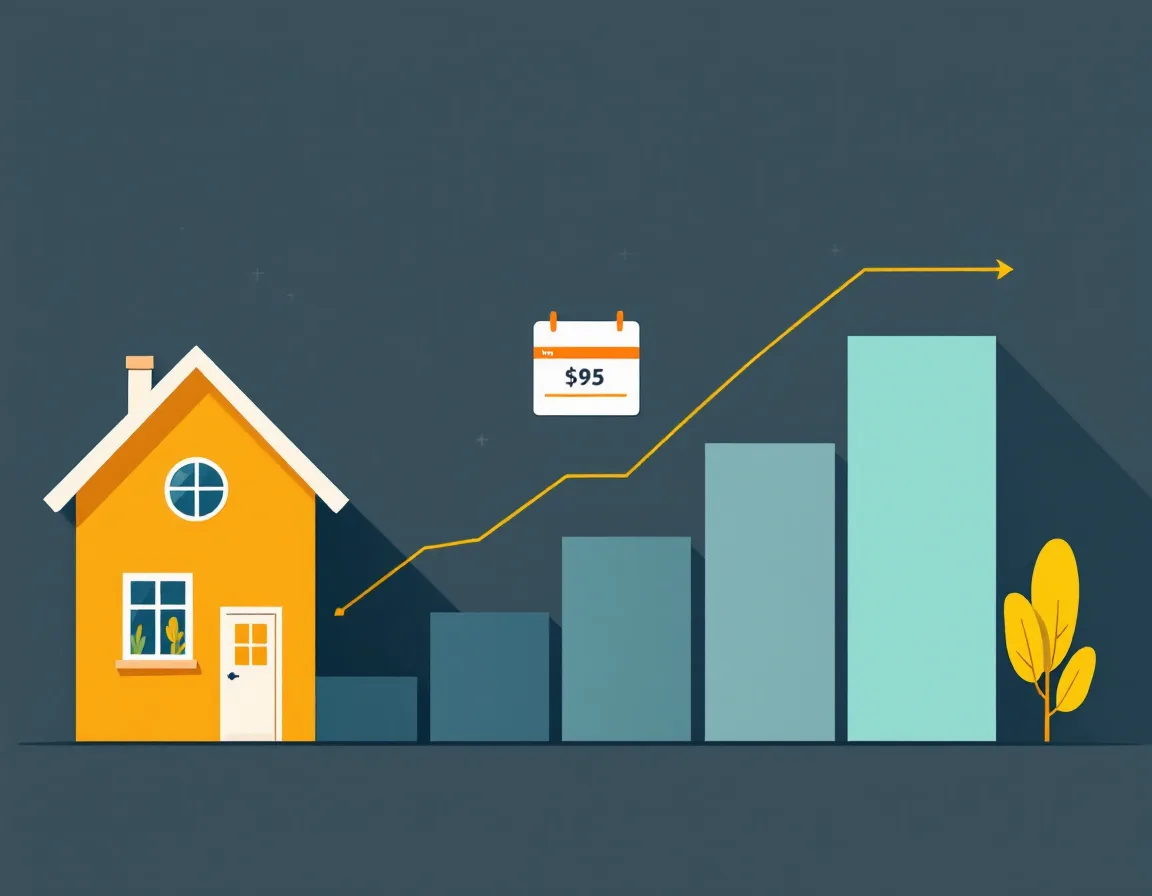
Appliances are typically 5-year property
Residential rental appliances — refrigerators, stoves, dishwashers, washing machines — are generally classified as 5-year MACRS property. Carpeting is typically 5-year as well. These items depreciate much faster than the building and, unlike the building itself, may qualify for bonus depreciation.
Furniture is generally 5- or 7-year property
Furniture in a furnished rental (beds, sofas, tables) is generally 5-year or 7-year MACRS property depending on type. Because these shorter-life assets depreciate faster, they throw off a proportionally larger deduction in the early years of the rental.
Track them separately from the building
To claim the shorter recovery period, list appliances and furniture as separate assets on your depreciation schedule — not rolled into the building's 27.5-year line. Keep receipts and record the placed-in-service date and cost for each item. If you didn't break them out at purchase, a cost segregation study can identify and reclassify them.
A worked example: why the split matters
Suppose you buy a residential rental for $300,000, allocate $50,000 to land, and put the remaining $250,000 on the building line. Separately, you spend $15,000 to furnish and equip the unit: about $6,000 on appliances (refrigerator, range, dishwasher, washer and dryer), $7,000 on furniture (beds, sofas, tables), and $2,000 on carpeting and window treatments.
If you bury that $15,000 in the 27.5-year building line, its first full-year deduction is roughly $15,000 ÷ 27.5 ≈ $545. Break it out as 5-year property instead and MACRS (200% declining balance, half-year convention) gives you 20% in year one — about $3,000 on that same $15,000. If 100% bonus depreciation applies to the property, you could deduct the entire $15,000 in the first year. The building doesn't change; you've simply stopped mislabeling short-life assets as 39- or 27.5-year property.
Bonus depreciation and Section 179
Appliances, furniture, and carpeting are MACRS personal property, which makes them eligible for two accelerators the building itself can't use. Bonus depreciation under IRC §168(k) lets you deduct a large percentage of an asset's cost in the year it is placed in service; the percentage has changed repeatedly by law, so confirm the current-year rate before you file. Section 179 expensing under IRC §179 can also apply to qualifying personal property in a rental, subject to the annual dollar cap and a business-income limitation — you can't use §179 to create or deepen a loss. Many landlords rely on bonus depreciation instead precisely because it is not limited by business income.
Used property qualifies too. If you buy a rental that already contains a working refrigerator and stove, you allocate part of the purchase price to those items and depreciate (or bonus-depreciate) them over five years, just as you would with new appliances you install yourself.
The de minimis safe harbor: sometimes skip depreciation entirely
The tangible property regulations offer a de minimis safe harbor election that lets you expense low-cost items immediately rather than capitalizing and depreciating them. For a taxpayer without an applicable financial statement, the threshold is $2,500 per item or invoice. That means an $800 refrigerator, a $600 sofa, or a $400 window unit can be written off in full the year you buy it, provided you make the election on that year's return and follow it consistently in your books.
This is often simpler than tracking dozens of small assets on a depreciation schedule for five years. The trade-off: items expensed under the safe harbor are treated as materials and supplies, so you deduct them now instead of spreading the deduction — useful when you want the current-year write-off and don't need to preserve basis.
Half-year vs. mid-quarter convention
Personal property normally uses the half-year convention — you're treated as placing it in service at the midpoint of the year regardless of the actual date, giving a half-year of depreciation in year one. But there's a trap: if more than 40% of the total basis of all personal property you place in service during the year falls in the last three months, the mid-quarter convention applies to everything for that year. Landlords who do a big Q4 furnishing push can inadvertently trigger it, which changes the first-year percentages. The building (real property) is on its own mid-month convention and doesn't enter this 40% test.
What happens at sale: Section 1245 recapture
Appliances and furniture are Section 1245 property. When you sell the rental, any gain attributable to depreciation you took on these short-life assets is recaptured as ordinary income under §1245 — not at the 25% maximum Section 1250 rate that applies to the building. In practice, used appliances and furniture have little resale value, so the sale price you allocate to them is usually small and the recapture is modest. Still, you must allocate a reasonable portion of the total sale price to these assets on Form 4797, and you can't ignore them just because the building is the main event.
Repairs, replacements, and partial dispositions
When an appliance breaks, replacing it creates a new asset you depreciate (or expense under the de minimis safe harbor). Repairing an existing appliance — a new compressor, a service call — is generally a currently deductible repair, not a capital cost. And when you retire an old asset, don't just leave it on the schedule: you can take a partial disposition and deduct the item's remaining undepreciated basis as a loss in the year you dispose of it, which also stops you from recapturing depreciation on an asset you no longer own.
Common mistakes to avoid
The biggest error is rolling every dollar of a furnished purchase into the 27.5-year building line and forfeiting years of accelerated deductions. Others: forgetting to remove a replaced appliance from the depreciation schedule; treating tenant-supplied or personal-use items as depreciable business property; and neglecting to keep the receipts and placed-in-service dates that substantiate each asset's class and cost if the return is examined. Good asset-level records are what let you defend a faster schedule.
Appliances vs. structural components
Not everything that plugs in is 5-year property. The line runs between personal property — free-standing, removable items like a refrigerator, range, dishwasher, or window air-conditioning unit — and structural components that are part of the building and depreciate over 27.5 years. A central HVAC system, built-in cabinetry, and permanently installed lighting are generally treated as part of the real property. A window AC unit, by contrast, is movable personal property eligible for the 5-year class. When an item is genuinely part of the building's operation and permanently attached, it usually follows the building; when it's a self-contained appliance you could unplug and carry out, it usually qualifies for the shorter life. Getting the classification right at purchase avoids both lost deductions and the risk of over-aggressive claims that don't hold up on exam.
How this interacts with the passive loss rules
Accelerating deductions on appliances and furniture is powerful, but the resulting loss still runs through the passive activity loss rules. If your rental generates a net loss, you generally can only deduct it against passive income — unless you actively participate and qualify for the up-to-$25,000 special allowance (which phases out between $100,000 and $150,000 of modified AGI), or you're a real estate professional. So front-loading depreciation with bonus or Section 179 can create a larger paper loss than you can currently use; the excess carries forward as a suspended passive loss until you have passive income or sell the property. Time the acceleration for a year when you can actually use the deduction — a big first-year write-off is worth less if it's stranded as a carryforward.
A cost segregation study for the whole property
If you bought a property without breaking out its short-life components, a cost segregation study can retroactively identify appliances, carpeting, cabinetry, and land improvements (fencing, paving, landscaping — typically 15-year property) that were lumped into the building. Engineers and tax specialists allocate the purchase price across asset classes, and a Form 3115 change of accounting method lets you claim the missed accelerated depreciation as a catch-up adjustment without amending prior returns. Studies make the most economic sense on higher-value properties where the reclassified basis is large enough to justify the study's cost, and they pair especially well with years when bonus depreciation percentages are high.
Planning tips
A few habits maximize the benefit: itemize every appliance, furniture piece, and floor-covering purchase with its cost and in-service date; decide each year whether the de minimis safe harbor or depreciation serves you better for small items; watch the fourth-quarter 40% test if you buy heavily late in the year; and coordinate accelerated deductions with your ability to actually use them under the passive loss rules. Above all, keep the asset detail — the schedule that lists each item, its class, and its basis is what turns a favorable-in-theory strategy into deductions you can defend.
Frequently asked questions
What MACRS class are rental appliances?
Generally 5-year property, compared to 27.5 years for the building itself.
Can rental appliances receive bonus depreciation?
Yes — 5-year personal property qualifies for bonus depreciation, unlike the building structure. Confirm the current-year bonus percentage, which has changed by law over time.
Can I just expense a cheap appliance instead of depreciating it?
Often yes — the de minimis safe harbor election lets you expense items costing up to $2,500 each in the year you buy them, rather than depreciating over five years.
What tax rate applies to appliance depreciation when I sell?
Depreciation on appliances and furniture is Section 1245 property, recaptured as ordinary income up to the amount of depreciation taken — reported on Form 4797.
What if I furnish the unit heavily in the fourth quarter?
Watch the mid-quarter convention: if more than 40% of your personal-property basis for the year is placed in service in the last quarter, mid-quarter rules apply to all of it and change your first-year deduction.
Sources
- IRS Publication 946 — How to Depreciate Property
- IRS — Cost Segregation Audit Techniques Guide
- IRS Publication 527 — Residential Rental Property
Educational information and estimates only. Not tax advice. Tax rules change and vary by situation; consult a qualified tax professional before acting.