 Real Estate Tax Calc
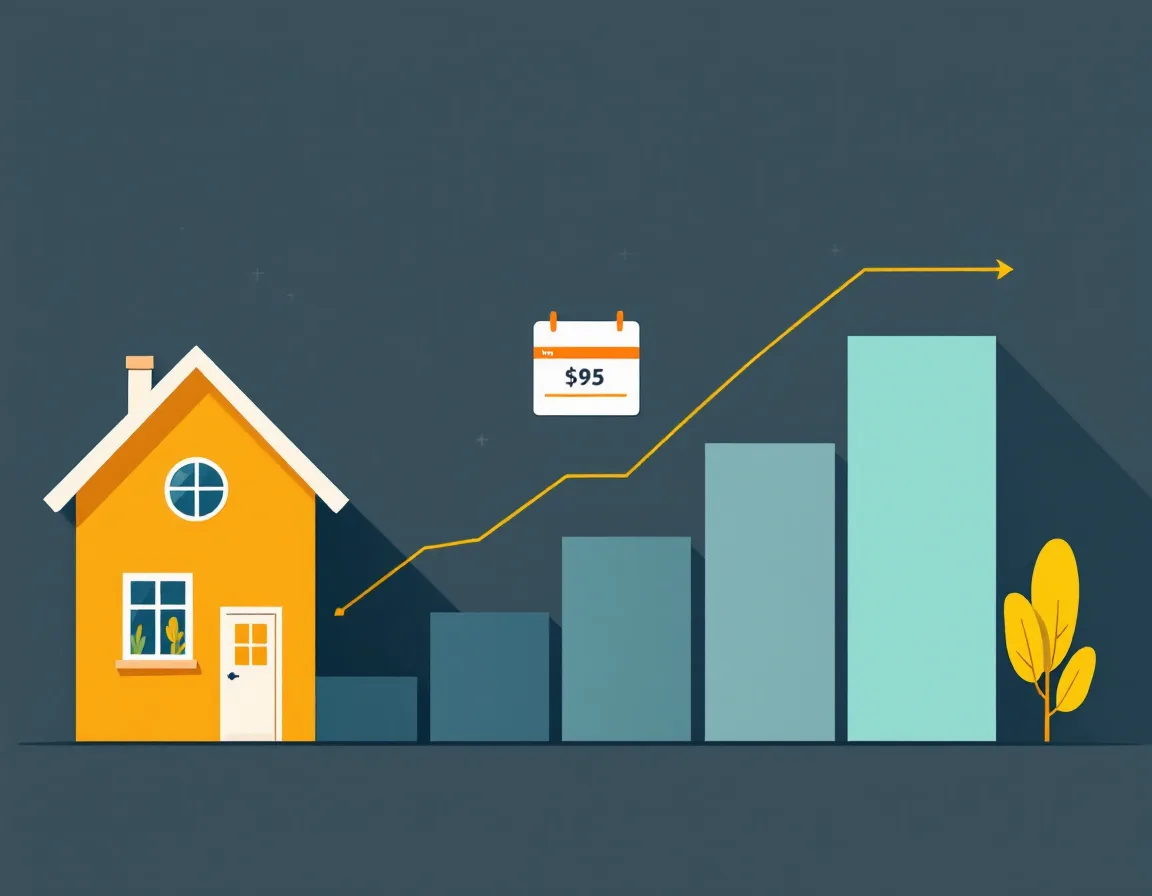
What "capital gains basis" means for property
When investors search for a "capital gains property account," they are usually looking for information about how to track the tax basis of their real estate holdings—not a special type of financial account. There is no single-purpose "capital gains account" for property; rather, your basis is a running calculation that you (and your CPA) maintain throughout the ownership period.
Your adjusted basis in a property is the tax equivalent of your net cost—what the IRS considers you to have "paid" for the asset in the economic sense. At the time of sale, your capital gain equals: Amount Realized (net selling price after selling costs) minus Adjusted Basis. The higher your adjusted basis, the lower your gain. The lower your adjusted basis, the higher your gain.
For a rental property, the adjusted basis changes every year as you:
Add capital improvements (new HVAC, roof replacement, additions, etc.); and
Subtract depreciation deductions taken on the building and any depreciable improvements.
After many years of ownership, the adjusted basis of a property can be substantially lower than the original purchase price—which means a substantially larger gain at sale and a larger depreciation recapture liability.
Starting basis: what's included at purchase
Your initial basis begins at the time of purchase and includes more than just the purchase price:
Purchase price: The contract price of the property.
Acquisition closing costs: Certain closing costs add to basis—title insurance paid by the buyer, recording fees, transfer taxes paid by the buyer, attorney fees related to acquiring the property, and certain loan origination costs. (Note: mortgage points paid on a rental property are generally deducted over the life of the loan, not added to basis.)
Land vs. building allocation: Only the building (not land) is depreciable. At purchase, you must allocate the total basis between land and building. This is typically done by using the county assessor's ratio of land to total assessed value, an appraisal, or an engineer's estimate. A property with a $300,000 total basis where land accounts for 20% has a $60,000 land basis (non-depreciable) and a $240,000 building basis (depreciable).
For inherited property: basis equals the fair market value at the date of the decedent's death (the "stepped-up basis"), not the original purchase price. This can dramatically reduce or eliminate capital gains on inherited rental properties.
For gifted property: basis is generally the donor's adjusted basis (the "carryover basis"), not the FMV at the time of the gift. This preserves the donor's gain in the recipient's hands.
What adds to basis: capital improvements
Under IRC §1016(a)(1), amounts paid for capital improvements increase the adjusted basis of the property. A capital improvement is one that:
Adds materially to the property's value; or
Substantially prolongs its useful life; or
Adapts it to a new or different use.
Examples of qualifying capital improvements: new roof, new HVAC system, room addition, new windows and doors, kitchen or bathroom remodel, electrical panel upgrade, new flooring (if significant), new appliances (may also be separately depreciable), parking lot resurfacing, and new landscaping that substantially upgrades the property.
Examples of ordinary repairs that do NOT add to basis: fixing a leaky faucet, painting rooms, replacing broken windows, patching the driveway, cleaning, and routine maintenance. Repairs are deducted as current expenses on Schedule E, not capitalized.
Note: Under the Tangible Property Regulations (Treas. Reg. §1.263(a)-3), there are de minimis safe harbors and routine maintenance safe harbors that allow certain expenditures to be expensed rather than capitalized, depending on your accounting policy elections. Your CPA can advise on whether to capitalize or expense specific improvements.
What reduces basis: depreciation
Each year you own a rental property, you take a depreciation deduction on the building. Under MACRS:
Residential rental property (apartments, single-family rentals, duplexes): 27.5-year straight-line depreciation.
Commercial property: 39-year straight-line depreciation.
Land improvements (fences, driveways, landscaping): 15-year property.
Personal property components (appliances, carpet): 5-year or 7-year property.
Each depreciation deduction reduces your adjusted basis by the same amount. A $10,000 annual depreciation deduction means your adjusted basis is $10,000 lower than it was the year before.
Critically, under IRC §1016(a)(2), your basis is reduced by depreciation "allowed or allowable"—meaning depreciation you were entitled to claim, even if you failed to claim it on your returns. If you skipped depreciation deductions for several years, your basis has still been reduced by those amounts. Investors who discover they missed depreciation deductions should file Form 3115 to catch up on missed depreciation; simply starting to claim it going forward is not the correct approach.
Sample basis worksheet
Here is a simplified basis tracking worksheet for a rental property purchased in 2018:
Initial basis at purchase (2018): $300,000 (land: $60,000; building: $240,000)
+ Acquisition closing costs capitalized: $4,500
= Starting adjusted basis: $304,500 (land: $60,000; building: $244,500)
Annual depreciation on building ($244,500 ÷ 27.5): $8,891/year
Year-end 2020: New HVAC added: +$12,000
(HVAC is 5-year MACRS personal property — depreciated separately)
Year-end 2022: Roof replacement (capital improvement): +$18,000
(Added to building basis; depreciated over remaining life or as separate component)
Year-end 2026 (8 years of ownership):
Building depreciation taken: $8,891 × 8 = $71,127
Remaining building adjusted basis: $244,500 + $18,000 (roof) − $71,127 + roof depreciation adjustments... (this gets complex; your CPA handles this through the depreciation schedule)
The key point: every improvement and every year of depreciation must be tracked and documented.
How long to keep property records
The standard statute of limitations for the IRS to audit a tax return is three years after the return was filed (or two years after tax was paid, whichever is later). However, for property basis, the relevant records span the entire ownership period—which may be 20, 30, or 40 years. If you sell a property in 2040 that you bought in 2000, you need the 2000 closing documents to establish basis.
Best practice: keep all records related to property basis indefinitely—or at least through the statute of limitations period after you file the return for the year you sell the property. If you do a 1031 exchange, you need the records from the relinquished property to establish the replacement property's basis, so keep them through the statute of limitations for the final sale.
Frequently asked questions
What is a capital gains basis for property?
Your basis (or cost basis) in a property is what you paid for it plus certain additional costs, adjusted upward for capital improvements you made and downward for depreciation deductions you claimed. Basis is the starting point for calculating your capital gain at sale: gain equals amount realized (selling price minus selling costs) minus adjusted basis.
Do capital improvements increase my property basis?
Yes. Capital improvements permanently add to your property's adjusted basis, reducing your capital gain when you sell. Qualifying improvements include structural additions, new HVAC systems, roof replacements, and kitchen remodels—expenditures that add value or extend the useful life of the property. Routine repairs and maintenance do not add to basis.
How long must you keep property records for capital gains purposes?
Keep records related to the basis of property for as long as you own it plus at least three years after you file the return for the year you sell it. Because basis can span decades of ownership, improvements, and depreciation, most tax advisors recommend keeping property records indefinitely, or at least until seven years after the final sale.
What happens if I don't have records of my property basis?
Without adequate basis records, the IRS may default to treating your entire sale proceeds as gain. It is your responsibility to establish basis. If records are incomplete, you may be able to reconstruct basis from closing documents, tax returns, county assessor records, and bank statements—but this is more difficult and uncertain than maintaining records from the start.
Educational information and estimates only. Not tax advice. Tax rules change and vary by situation; consult a qualified tax professional before acting.