 Real Estate Tax Calc
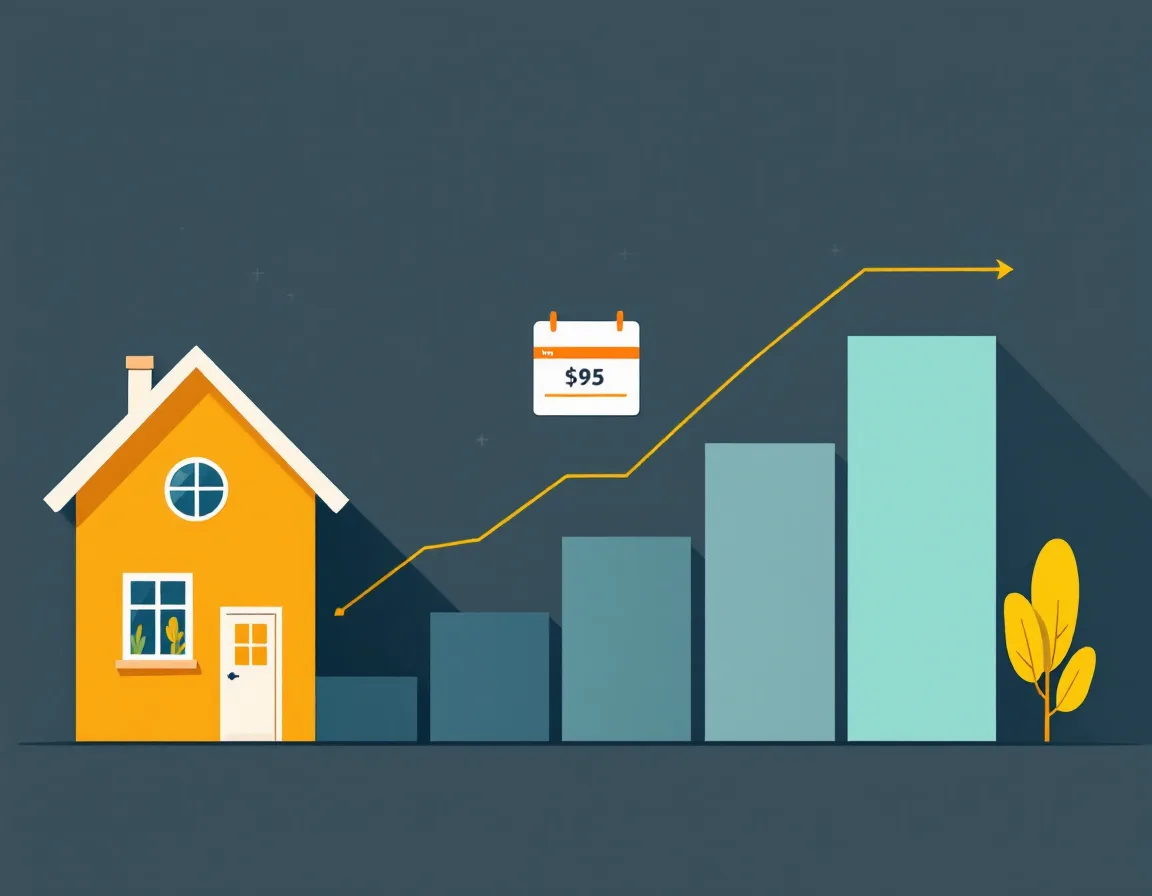
The two recovery periods at a glance
Under the Modified Accelerated Cost Recovery System (MACRS), all real property placed in service after 1986 is depreciated using the straight-line method. The recovery period — the number of years over which you spread the deduction — is determined by whether the property is residential rental property (27.5 years) or nonresidential real property (39 years).
The difference is not trivial. A building with a $500,000 depreciable basis produces annual depreciation of approximately $18,182 under 27.5-year depreciation ($500,000 ÷ 27.5) versus $12,821 under 39-year depreciation ($500,000 ÷ 39). The 27.5-year period generates $5,361 more in annual depreciation — a meaningful difference in annual cash flow and tax liability for real estate investors.
How the IRS defines residential rental property
The IRS test for residential rental property is specific: a building qualifies as residential rental property under IRC § 168(e)(2)(A) if 80% or more of the gross rents from the building come from dwelling units. A dwelling unit is a house or apartment used to provide living accommodations.
A single-family rental home, duplex, triplex, or apartment building where tenants pay rent to live in the units qualifies as residential rental property — provided the 80% test is met. Most pure residential rentals easily pass this test since 100% of rents come from dwelling units.
Short-term rentals to transient guests (stays averaging 30 days or fewer) such as hotels, motels, or some Airbnb properties do not qualify as residential rental property even if the units are apartments. The IRS treats transient occupancy as hotel-type use rather than residential dwelling use, which pushes those properties toward the 39-year nonresidential category. This is an important trap for short-term rental investors who assume their property automatically gets 27.5-year depreciation.
What counts as nonresidential real property
Nonresidential real property is simply all real property that is not residential rental property — it is the residual category. Office buildings, retail centers, industrial warehouses, commercial strip malls, standalone restaurants, and mixed-use buildings that fail the 80% test are all depreciated over 39 years.
The 39-year period was extended from 31.5 years to 39 years by the Revenue Reconciliation Act of 1993 for property placed in service after May 12, 1993. Any commercial property placed in service between 1987 and mid-May 1993 uses the original 31.5-year period — a distinction relevant to very old properties still on depreciation schedules.
Land is not depreciable at all, regardless of the property type. Only the building and structural improvements are depreciated. Land must be allocated out of the purchase price before computing the depreciable basis, typically based on assessed value ratios or an appraisal.
Mixed-use properties and the 80% test
A property with both residential and commercial components — for example, a building with ground-floor retail and upper-floor apartments — must be tested against the 80% threshold. If 80% or more of gross rents come from the apartment units, the entire building structure is depreciated over 27.5 years. If commercial rents push the residential share below 80%, the entire building shifts to 39 years.
The classification is determined year by year in theory, but in practice the IRS generally looks at the building's typical use at the time it is placed in service. Significant changes in use — converting commercial space to residential or vice versa — can trigger a reclassification and a change in accounting method requiring IRS consent.
For buildings right near the 80% threshold, tracking rental income by source is important. The classification drives the annual deduction on the primary structure, though cost segregation components (personal property and land improvements) are depreciated on their own separate schedules regardless of which main category applies.
The mid-month convention for real property
Both 27.5-year and 39-year real property use the mid-month convention under MACRS. Under this convention, the IRS assumes you placed the property in service at the midpoint of the month in which you actually placed it in service, regardless of the actual day.
This means: if you place a rental in service on October 3, you get 2.5 months of depreciation for the year (the second half of October, all of November, and all of December). The annual rate is reduced proportionally for the partial year. The mid-month convention applies only to real property — personal property and land improvements use the half-year convention (or mid-quarter convention if more than 40% of depreciable assets are placed in service in the fourth quarter).
Practically, property managers and investors rarely worry about the day-of-month detail because the difference between the 1st and the 15th in any given month is only half a month of depreciation. But if you are placing an expensive property in service in December, the mid-month convention guarantees you get 0.5/12ths of a full year's depreciation rather than none, which is still worth capturing.
Annual depreciation calculation with worked examples
For a residential rental with a $400,000 depreciable basis (building value only, after allocating land): annual depreciation = $400,000 ÷ 27.5 = $14,545 per year once fully in service. In the first partial year, the mid-month convention reduces this proportionally based on which month service began.
For a commercial property with the same $400,000 depreciable basis: annual depreciation = $400,000 ÷ 39 = $10,256 per year. The residential investor deducts $4,289 more per year for the same basis. Over 10 years, the residential property owner has claimed $42,890 more in depreciation deductions — a real cash-flow and tax advantage.
These are straight-line figures for the structure itself. Personal property components identified in a cost segregation study (appliances, flooring, specialized electrical, cabinetry) are depreciated over 5 or 7 years — much faster — and can qualify for bonus depreciation. Adding cost segregation on top of a 27.5-year building can dramatically front-load deductions in the early years of ownership.
What happens when you change property use
If a residential rental becomes predominantly commercial (or vice versa), the depreciation recovery period changes. The IRS handles this as a change in use. Under Revenue Procedure 2011-26, real property that changes its classification switches to the new recovery period in the year of the change, using the property's remaining adjusted basis as the new starting point.
A common scenario: you buy a mixed-use building as residential (80%+ rents from apartments), then lease the commercial space to a restaurant that generates higher rents, pushing residential rents below 80%. The building reclassifies to nonresidential (39-year). You continue depreciating the remaining basis over the 39-year period from the year of change forward — you don't restart from zero. The overall deduction slows down, which is why investors in transitioning properties should model the impact of a tenant mix change on their depreciation schedule.
Alternative Depreciation System: when 40 years applies
The Alternative Depreciation System (ADS) is a separate MACRS depreciation method with longer recovery periods. Under ADS, residential rental property is depreciated over 40 years and nonresidential real property over 40 years as well — both use a 40-year straight-line method.
ADS applies mandatorily in certain situations: listed property used 50% or less for business, property used outside the United States, tax-exempt bond-financed property, and property used by tax-exempt organizations. ADS also applies when a taxpayer makes an election under IRC § 168(g) — sometimes done as part of a qualified business income deduction strategy or when participating in certain passive activity calculations.
The most common voluntary reason a real estate investor might elect ADS: participating in a business where IRC § 163(j) interest deduction limits apply. Electing the real property trade or business exception under § 163(j)(7) requires depreciating residential real property over 30 years (ADS) and nonresidential over 40 years. The trade-off is exchanging faster depreciation for the ability to deduct business interest in full. Model this election carefully — it is irrevocable for the property once made.
Component depreciation: cost segregation and the interaction
The 27.5- and 39-year periods apply specifically to the building structure and its structural components. A cost segregation study identifies personal property and land improvements within the building that qualify for shorter MACRS recovery periods: 5 years (appliances, carpeting, certain fixtures), 7 years (furniture), and 15 years (land improvements such as parking, sidewalks, and landscaping).
These components are depreciated on their own schedules regardless of whether the building qualifies as 27.5-year residential or 39-year commercial. A cost segregation study does not change the 27.5- or 39-year period for the remaining structure; it carves out portions of the building that qualify for faster depreciation and subjects them to 5-, 7-, or 15-year schedules, leaving the structural shell on the original 27.5 or 39 years.
Bonus depreciation — currently 100% for qualified property placed in service in tax year 2026 under restored rules — can apply to the personal property and 15-year land improvement components identified in a cost segregation study. The structural building itself (the 27.5- or 39-year portion) does not qualify for bonus depreciation under current law.
Frequently asked questions
How do I know if my rental is 27.5-year or 39-year property?
If 80% or more of the gross rents come from residential dwelling units (tenants who live there), the building is 27.5-year residential rental property. If it's primarily commercial or fails the 80% test, it's 39-year nonresidential real property.
Is a short-term rental like Airbnb depreciated over 27.5 years?
Not necessarily. Units rented to transient guests on short-term stays may be treated as hotel-type property, which is 39-year nonresidential real property. Consult IRS guidance and your tax advisor based on the specific rental arrangement.
What's the annual depreciation on a $300,000 residential rental building?
$300,000 ÷ 27.5 = approximately $10,909 per year in annual depreciation, using straight-line MACRS, once fully in service. Year 1 is reduced by the mid-month convention.
Does land use 27.5 or 39 years?
Neither. Land is not depreciable. You must allocate the land value out of the purchase price before computing the depreciable basis of the building.
What is ADS and when does the 40-year period apply?
The Alternative Depreciation System (ADS) uses a 40-year recovery period for residential rental property. It applies mandatorily for property used outside the US or in certain other situations, and voluntarily when electing the real property trade or business exception under IRC § 163(j)(7).
Can a cost segregation study change my property from 27.5 to 39 years?
No. Cost segregation carves out personal property and land improvement components for shorter 5-, 7-, and 15-year depreciation but does not change the recovery period of the main building structure.
Sources
Educational information and estimates only. Not tax advice. Tax rules change and vary by situation; consult a qualified tax professional before acting.